


A 32-year-old man, known as Mr. Li on social media, recounts his and his wife’s ordeal with a lighthearted tone. Both born in the 1990s, they were diagnosed with Bickerstaff brainstem encephalitis shortly after tying the knot—a rare condition so uncommon that fewer than a dozen cases of couples both affected exist globally. Their newborn child tragically passed away. Facing what he calls a “huge wave of life,” he uses videos to document and share his story, gaining widespread support online.
Mr. Li told reporters that they were initially misdiagnosed with a stroke, leading to paralysis. Now, both he and his wife face a recovery period of five to seven years. Despite his optimism, he can now move parts of his body and speak, while his wife is slowly regaining the ability to eat. “I understand her. We support each other, and that’s what marriage is all about. Life is still sweet,” he said.
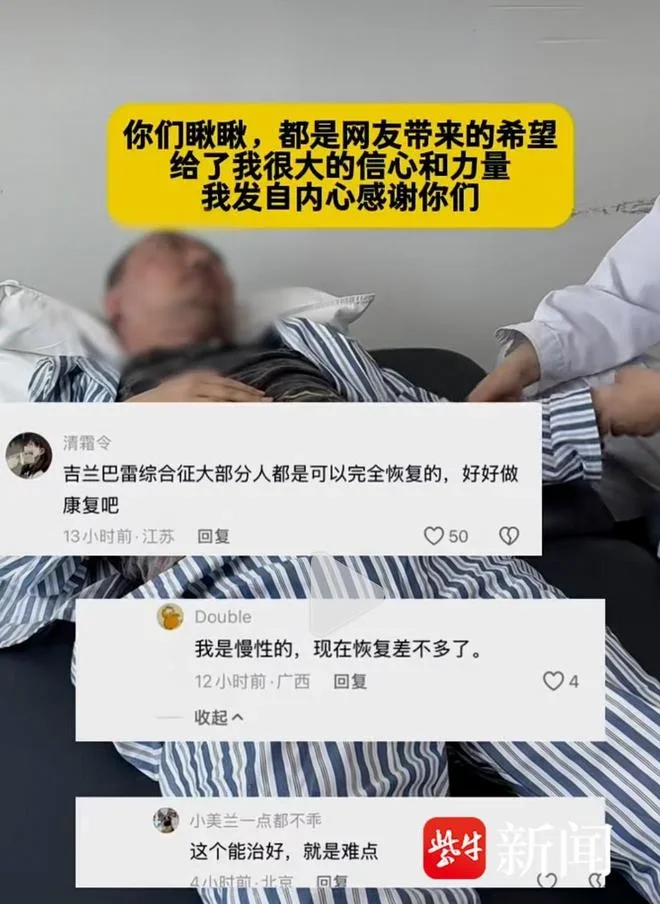
**Misdiagnosis Leading to Paralysis, Weight Loss from 180 to Under 100 Pounds**
Mr. Li’s social media posts feature photos from before their illness, showing a handsome couple. Both loved singing; they bonded while “karaoke-ing” and started dating after adding each other on WeChat. They registered their marriage in 2024 and soon welcomed a child, but their happy life took a turn.
In March 2025, Mr. Li began experiencing fever, fatigue, severe pain, dizziness, double vision, and numbness in his limbs. “After becoming paralyzed, I couldn’t speak, move, or eat. I could only drink milk, and I lost weight from 180 to under 100 pounds in a month,” he recalled.
Initially treated at a hospital in Tianjin, he was diagnosed with a stroke. “They gave me an infusion of gastrodin, but my condition worsened. Without that misdiagnosis, I might not be paralyzed now,” he said. He regained speech this January and can now operate a phone with one hand. His parents were unaware of the misdiagnosis, and he has not pursued legal action.
In May 2025, just two months after Mr. Li was diagnosed at Tianjin Medical University General Hospital, his wife—six months pregnant—developed the same symptoms. “When she fell ill, I was already hallucinating from my own condition, not thinking clearly. Looking back, it was terrifying.” Their baby did not survive, a wound that remains deeply painful.
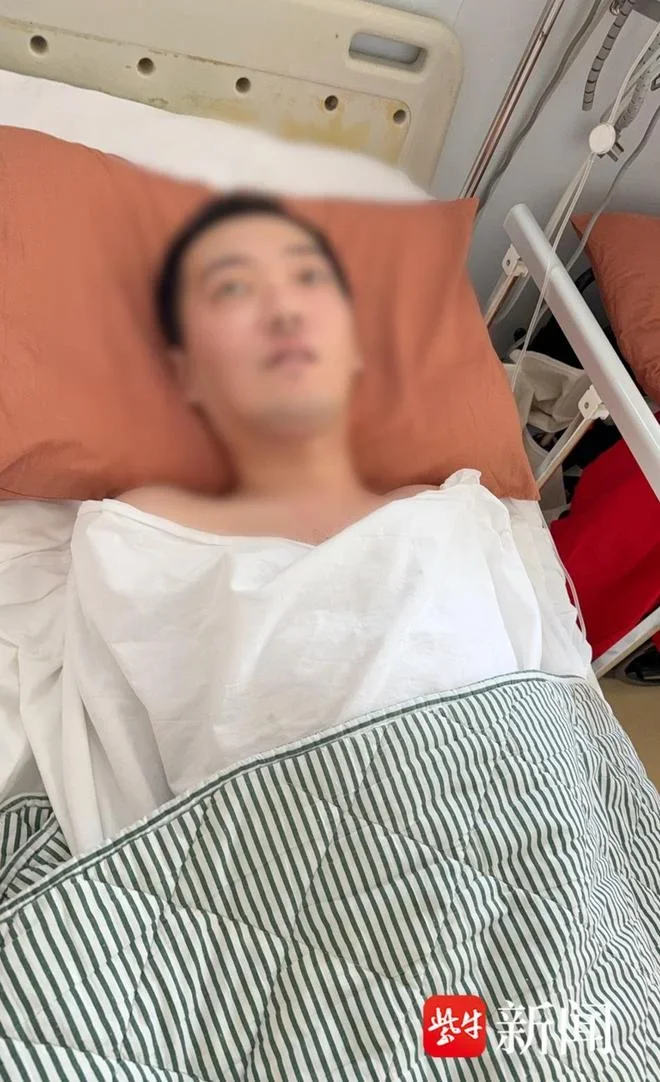
**The Meaning of Marriage: Supporting Each Other Through Hardship**
Life after paralysis has been tough. Monthly rehabilitation and medication cost about 15,000 yuan, plus 200,000 yuan in debt. The couple has lost their jobs. “We eat steamed buns and pickled vegetables now. My parents don’t talk about financial burdens, but I can feel the pressure,” he said. They created a social media account to document their journey and sell daily necessities through a shopping window. Initially hesitant, Mr. Li accepted the situation. “You have to accept it. So, we started filming.” The encouragement and support from netizens have kept them going.
Their rehabilitation includes acupuncture, lower-limb ultrasound feedback, electrical stimulation, and massage. In a video, his mother lifts his tall body from a wheelchair to a bed—a worrying sight. Mr. Li thanked doctors at Tianjin Beida Medical Ocean Petroleum Hospital for their acupuncture. “My mouth wouldn’t close, and I couldn’t chew, but they slowly fixed it. Now my legs and right forearm have sensation, and I’m improving day by day.” Hormones have caused weight gain.
His wife still cannot speak, but they communicate through unspoken understanding. “Others don’t get her, but I can express what she wants. When I do, she smiles, knowing I understand her.” Their relationship remains sweet. “I used to cook for her. If she got hungry at night, she’d wake me up, and I’d make her food.” He reflected, “We’ve been married just a year but have been through so much. This taught us that marriage means walking together through difficulties.”
Mr. Li also noted changes in his social circle: “Some friends still care and help, but others I thought were close have stopped contacting me. I’ve learned a lot.” Despite this, he stays upbeat, listening to crosstalk by Guo Degang and Zhang Shichuan for joy and healing.
While aware that recovery may take five to seven years and might leave some disabilities, he remains hopeful, planning to continue making videos and even try live-streaming sales. “Netizens are very supportive. Many kind people place orders in our shopping window to help ease our burden.”
**Videos Labeled AI-Generated? Recovering Hands Need Software Assistance**
“Just out of hospital, we’ll be readmitted in June. For now, we’re at home,” Mr. Li said. His daily routine: after breakfast, his mother pushes him in a wheelchair to the hospital for rehabilitation with his wife, lasting until evening. Simple communication is tiring; he can only spare some time each morning. “The video footage is shot by my mother. She was hesitant at first. And filming my life on camera takes courage too,” he said. They don’t post daily because “rehab routines are repetitive.”
Videos sometimes carry “AI-generated” labels, sparking suspicion. Mr. Li explained that due to unsteady hands, he uses AI to stitch pictures together. “Some people question it, but I usually respond when I see comments.” He spends about an hour daily reading and replying to comments.
**Expert Insight: Both Couple Likely Exposed to Same Infection Source**
Commenters wonder what caused their simultaneous illness. Mr. Li says there’s no definitive answer: “Could be heavy metal intake or the hamster we kept in 2024. We also ate a lot of seafood, which might contain heavy metals.”
Dr. Jiao Dongsheng, director of the neurology department at Eastern Theater Command Air Force Hospital, noted that based on medical records, the diagnosis is Bickerstaff brainstem encephalitis—a rare autoimmune neurological disorder and a subtype of Guillain-Barré syndrome (GBS). “GBS is an autoimmune disease where the immune system attacks the body’s own nerves, primarily affecting peripheral nerves.”
In China, fewer than 100 new cases of this disease occur annually. “Both spouses developing it simultaneously is extremely rare,” Dr. Jiao said. The disease often follows a preceding infection, such as Campylobacter jejuni or influenza virus, which triggers the immune system to mistakenly attack the nervous system.
“Given the couple fell ill together, the cause is likely environmental or dietary—both exposed to the same infection source,” Dr. Jiao explained. For example, if they both ate undercooked poultry or handled hamster feces without washing hands, they could have developed gastroenteritis. After symptoms like fever and diarrhea resolved, the immune system might have cross-reacted with similar antigens in brainstem cells (which normal individuals usually lack), causing neurological symptoms. Early signs include double vision and unsteady gait, later leading to drowsiness and confusion.
Dr. Jiao warned that the disease progresses rapidly. Without timely treatment, it can damage the respiratory center, leading to respiratory failure. Some patients require mechanical ventilation. If untreated for over a week, it can cause coma, quadriplegia, and death, with a mortality rate of 5–10%. “If diagnosed within the first week and treated with intravenous immunoglobulin, the prognosis is generally good.”
“These patients likely have received immunoglobulin and hormone therapy and are now stable,” Dr. Jiao said. The recovery period involves nerve self-repair and mild rehabilitation. Most patients recover within 2–3 months, but if delayed, recovery takes longer.
*(Reported by Yangtze Evening Post/Ziniu News reporters Zhang Nan and Wan Huijuan)*
